
Persian literati explore Naser-e Khusraw’s Guide of Travels
TEHRAN – Literature scholars mentioned the Safarnamah (E book of Travels) of Abu Muin Naser-e Khusraw al-Marvazi al-Qubadiyani, identified as Naser-e Khusraw, all through an on the web session on Tuesday.
The session was organized by the Persian literary month to month Bokhara and Elmi Farhani Publications to celebrate the launch of a new version of the guide by the publisher.
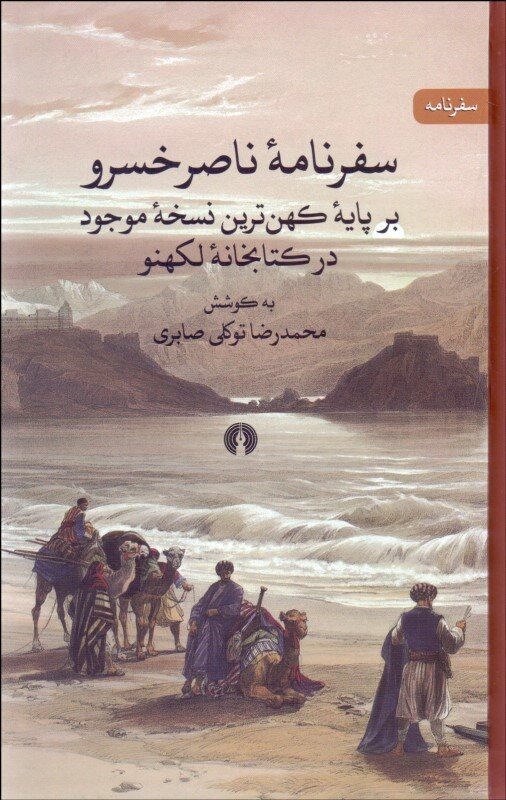
The edition has been corrected by Mohammadreza Tavakkoli-Saberi, who shipped a speech during the session, which streamed by Instagram.com/elmifarhangipub and Instagram.com/bukharamag.
Mohammad Emadi Haeri, Bahram Parvin Gonabadi, Pajand Soleimani, Nadereh Rezai and also Ali Dehbashi gave lectures in the course of the session.
Tavakkoli-Saberi is also the author of “The Wanderer of the Yamgan Valley”, a novel he has written about the life story of Naser-e Khusraw who lived all through the eleventh century.
Naser-e Khusraw‘s most-celebrated prose get the job done, The Safarnameh is a diary describing his 7-12 months journey by Syria and Palestine. It is a important file of the scenes and occasions that he witnessed.
Tavakkoli-Saberi adopted the route in a very similar journey to produce his e book “The Lapsable Journey”, which was published by Elmi Farhangi in 2018.
Born in 1004 in Qubadiyan, Merv, Khorasan (Iran), Naser-e Khusraw came of a family of federal government officials who belonged to the Shia branch of Islam.
In 1045, he went on a pilgrimage to Mecca and ongoing his journey to Palestine and then to Egypt, which was ruled at that time by the Fatimid dynasty.
The Fatimids headed the Ismaili sect, an offshoot of Shiism, and they sent missionaries to propagate their beliefs in the course of the Islamic globe.
Naser-e Khusraw became these kinds of a missionary, although it is not specific no matter if he grew to become an Ismaili right before his vacation to the Fatimid capital or following. He returned to his homeland in what is now Afghanistan, but his vigorous advocacy of the Ismaili ideology inside Sunni territory pressured him to flee to Badakhshan, in which he spent the relaxation of his days, lamenting in his poetry that he was unable to be an active missionary.
His poetry is of a didactic and devotional character and consists largely of extensive odes that are regarded as to be of higher literary high quality. His philosophical poetry incorporates the Rawshanainameh (“Book of Light”).
He also wrote a lot more than a dozen treatises expounding the doctrines of the Ismailis, amid them the Jami al-Hikmatayn (“Union of the Two Wisdoms”), in which he tried to harmonize Ismaili theology and Greek philosophy.
Naser-e Khusraw’s literary design is simple and vigorous. In his verse, he shows good technological virtuosity, while his prose is impressive for the richness of its philosophical vocabulary.
He died c. 1072/77 in Yamgan, Badakhshan, Central Asia, which is now in existing-working day Afghanistan.
Picture: Entrance cover of Naser-e Khusraw’s Safarnamah (E book of Travels) corrected by Mohammadreza Tavakkoli-Saberi.
MMS/YAW