
Hawaii travel team tours island’s ugly realities
Hawaii looms huge in the creativity of the U.S. mainland as a vacationer paradise: stunning beaches and volcanoes, scrumptious foods, and the spirit of “aloha,” a spirit of welcoming. But aloha is a complex concept, and for some, the vacationer field sells the strategy of Hawaii as uncomplicated and with no any issues.
DeTours, an educational team run by Kyle Kajihiro and Terry Keko’olani, tries to pull back the blinders men and women have on when they check out Hawaii. “It’s type of an anti-vacationer encounter,” Kajihiro stated, laughing. DeTours highlights the strategies that Hawaii is dominated by the armed service and the vacationer business by taking guests to components of Oahu in which they can be exposed to a distinctive element of Hawaii’s background. Regular trips final close to 50 % a working day and contain visits to sites like Pearl Harbor, parts that are staying reclaimed environmentally and components of Honolulu vacationers are not likely to go to.
DeTours grew out of operate Kajihiro and other people did with the American Good friends Support Committee, a Quaker activist group that is effective on a broad range of peace and justice concerns. The group experienced worked on anti-militarism campaigns given that the 1970s, both of those to emphasize the decline of land from Indigenous Hawaiians and to protest the connections concerning Hawaii and U.S. military energy as it was used in Vietnam. Kaho’olawe Island, a sacred spot for Hawaiians, was applied by the military entirely to test explosives: A single these kinds of examination in 1965 associated detonating 500 tons of TNT at a time to replicate the outcome of smaller nuclear blasts. These varieties of assessments led to the profession of the island by Hawaiians commencing in 1976 by 1993, the armed forces ceded the island back again to the state.
To advertise being familiar with and studying, the American Buddies Provider Committee usually organizes outings for folks to take a look at and master about other nations around the world. But in Hawaii, Kajihiro and others recognized that they normally had incredibly progressive buddies who, when checking out Hawaii, however taken care of the islands like a playground. “It was always hanging that when people would believe about Hawaii, their vital thinking would kind of transform off,” Kajihiro reflected.
For Kajihiro, the tourism marketplace has offered this strategy of Hawaii as a multicultural paradise without any complications, and that plan created no perception to him. “Part of the conversation amongst tourism and militarism is that a person masked the violence of the other, and the other offered the pressure which maintains this unjust presence.”
Kaijihiro and Keko’olani wanted to break people today out of this behavior. At initially, they labored primarily by word-of-mouth. “We saved obtaining requested to do it,” Kajihiro clarifies. “We hardly ever publicize, it’s not anything we really established up but it just turned a detail.” Lots of of their shoppers are college students, with quite a few teams coming from the University of Hawaii, but they get visitors coming from the mainland as well.
The tours that Kajihiro and some others lead are intended to lose light on the historical past of the Hawaiian islands that are covered up by militarism and U.S. imperialism. Handful of individuals know what Pu’uloa refers to, but they’re considerably far more probably to know it by another identify: Pearl Harbor. For Indigenous Hawaiians, the harbor was a important resource of food items, as its construction built it perfect for aquaculture. That is dropped nowadays, and Pu’uloa and what it represented was ruined when it was reworked into a navy foundation. It’s now a Superfund site.
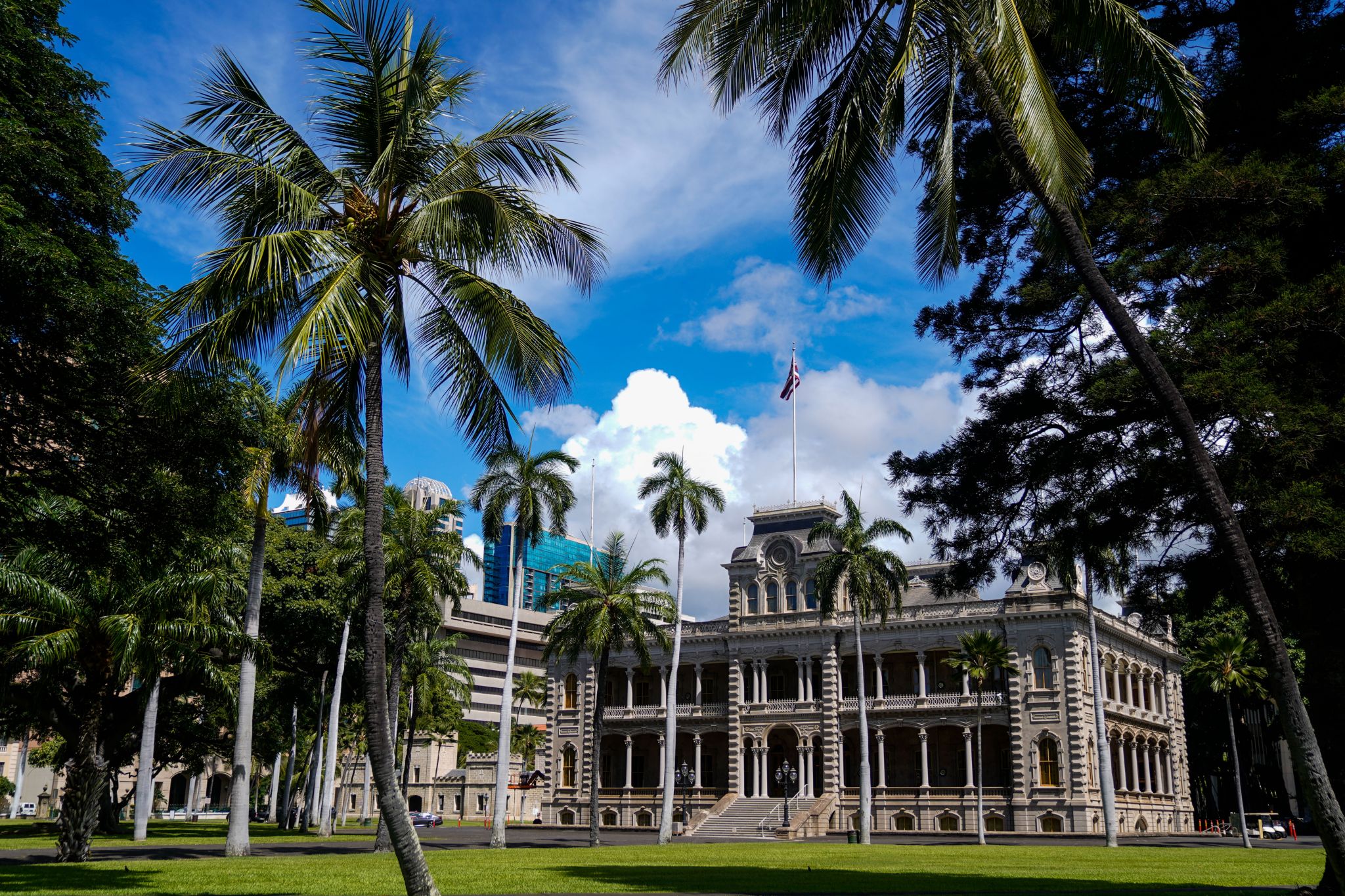
A regular tour starts off at Iolani Palace, which was the royal residence for the Hawaiian monarchy until the coup finished native Hawaiian rule in 1893. Guests then head to Camp H.M. Smith, headquarters of U.S. Indo-Pacific Command, a drive through the Pearl Harbor foundation, a prevent at the Pearl Harbor memorial, and a cease at the Hanakehau Finding out Farm. Hanakehau is 1 of the several entities and companies that exist to attempt and reclaim Hawaiian land. Drives as a result of Honolulu also stop by destinations like the Kalihi community that are working-course and immigrant neighborhoods dealing with their very own troubles, this kind of as racism and discrimination.
“We use that drive to acclimate people today to some of the contradictions … these are not areas where by tour buses would go,” Kajihiro spelled out. For Kajihiro, the aim powering DeTours is to raise recognition of these problems, but extra importantly, to get them to think about what Hawaii may possibly search like devoid of militarism.
Lunch at Hanakehau gets a discussion about different paths for the islands, and how guests can perform a section in that. “We want people to see Hawaii as a put where by they have associations and duties,” with numerous discussions centering all-around the idea of “kuleana,” a Hawaiian phrase loosely translating to responsibility in English. For site visitors, this signifies educating other individuals when they go back dwelling and complicated the U.S. government’s insurance policies.
Kajihiro also discussed that he sees the group’s mission as reflecting their have kuleana. The military’s role in Hawaii is not exclusively to provide as a base of operations, but as a place to venture electric power all across the globe. Throughout the 1960s, military routines in Hawaii could be felt in Vietnam right now, they are felt in Afghanistan. “The wars that emanate from Hawaii, that are commanded from here, the approaches and systems that are analyzed and perfected listed here, how is that harming individuals in other pieces of the earth? That’s an aspect of the accountability that we bear.”
When requested about what COVID-19 has done to the island overall economy, Kajihiro’s choose was twofold. On the one hand, the COVID pandemic has deeply harmed the Hawaiian overall economy. “We have 1 of the best unemployment fees because we’ve been addicted to the tourism financial system.” Nonetheless, from Kajihiro’s perspective, “it’s forced us to reckon with the environmental and social fees of tourism as a mainstay of the overall economy. What’s the issue of getting all of this if it’s creating everyday living more challenging and a lot more high-priced?” One particular far more beneficial aspect: Kajihiro has also observed more neighborhood solidarity by way of food stuff drives or arranging to link farmers with buyers.
DeTours and other teams like it are a eyesight for a various form of tourism. For most people and most vacationer-centered companies, you go somewhere for a minor although and then you leave. What Kajihiro and Keko’olani want people today to do is consider some part of that with them and to use vacation to sharpen their possess perception of obligation towards the rest of the environment.
Zeb Larson is a writer, historian and application developer. Find extra of his operate at zeblarson.com.