
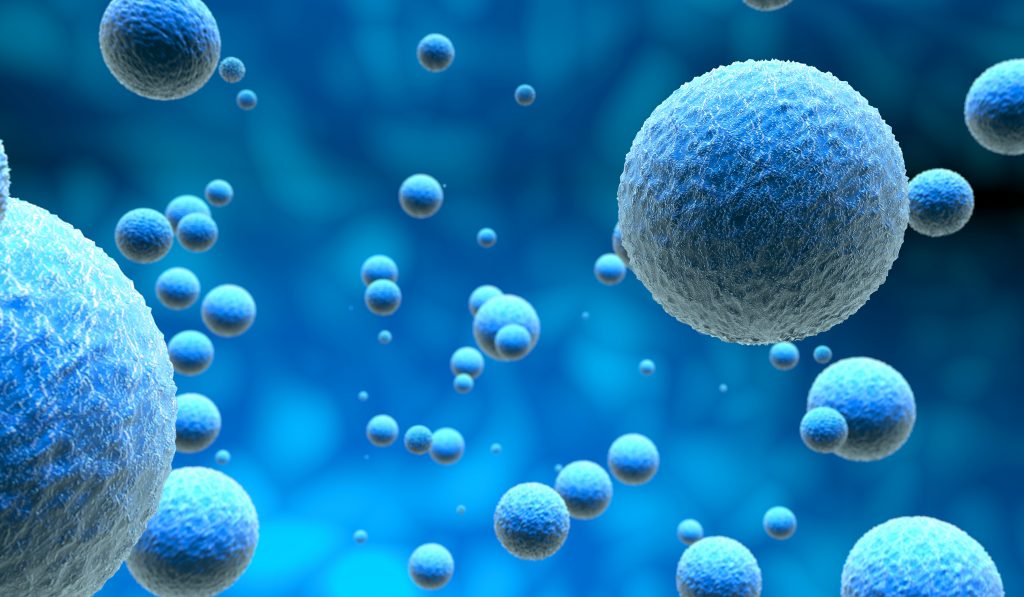
New research reveals how microplastic air pollution travels
Picture Credit score: Inventory.adobe
Microplastic particles are all also prevalent as a type of plastic air pollution at present, but accurately how they shift by means of and accumulate in the natural environment is inadequately recognized.
Now a new analyze from Princeton College, in Princeton, N.J., has disclosed the mechanism by which microplastics like Styrofoam, as well as particulate pollutants, are carried extended distances by way of soil and other porous media – achieving as much as Antarctica – with implications for blocking the distribute and accumulation of contaminants in food items and h2o sources.
The analyze, posted in Science Advances in November 2020, reveals that microplastic particles get stuck when touring by means of porous supplies these as soil and sediment but later crack absolutely free and frequently keep on to go substantially even more. Identifying this prevent-and-restart procedure and the ailments that regulate it is new, mentioned Sujit Datta, an assistant professor of chemical and organic engineering at Princeton – previously, researchers had thought that when microparticles acquired stuck, they typically stayed there, which constrained knowledge of particle spread.
Datta led the exploration crew, which located that the microparticles are pushed totally free when the amount of fluid flowing by way of the media stays higher enough. The Princeton researchers confirmed that the course of action of deposition, or the formation of clogs, and erosion, their break up, is cyclical clogs kind and then are damaged up by fluid stress above time and length, moving particles further by means of the pore room till clogs reform.
“Not only did we locate these amazing dynamics of particles getting caught, clogged, creating up deposits and then getting pushed by means of, but that approach enables particles to get distribute out in excess of a lot more substantial distances than we would have believed usually,” Datta claimed.
They tested two kinds of particles – “sticky” and “nonsticky” – which correspond with actual forms of microplastics identified in the atmosphere. Remarkably, they located that there was no change in the process itself that is, both equally however clogged and unclogged themselves at large more than enough fluid pressures. The only difference was where by the clusters formed. The “nonsticky” particles tended to get trapped only at narrow passageways, while the sticky kinds seemed to be able to get trapped at any area of the good medium they encountered. As a final result of these dynamics, it is now very clear that even “sticky” particles can unfold out about big regions and all over hundreds of pores.
In the paper, the scientists describe pumping fluorescent polystyrene microparticles and fluid by means of a transparent porous media produced in Datta’s lab, and then seeing the microparticles move below a microscope. Polystyrene is the plastic microparticle that tends to make up Styrofoam, which is normally littered into soils and waterways via transport supplies and rapid food items containers. The porous media they produced intently mimics the structure of by natural means-happening media, like soils, sediments, and groundwater aquifers.
Ordinarily porous media are opaque, which usually means you can not see what microparticles are executing or how they stream. Researchers generally evaluate what goes in and out of the media, and consider to infer the processes likely on inside of. By earning transparent porous media, the researchers overcame that limitation.
“Datta and colleagues opened the black box,” explained Philippe Coussot, a professor at Ecole des Ponts Paris Tech and an pro in rheology who is unaffiliated with the review.
“We figured out methods to make the media transparent then, by applying fluorescent microparticles, we can watch their dynamics in serious time using a microscope,” explained Datta. “The wonderful point is that we can really see what specific particles are doing beneath different experimental disorders.”
The research, which Coussot described as a “remarkable experimental solution,” confirmed that whilst the Styrofoam microparticles did get caught at points, they eventually were being pushed absolutely free, and moved all through the complete duration of the media through the experiment.
The final aim is to use these particle observations to make improvements to parameters for larger scale products to predict the quantity and place of contamination. The styles would be dependent on varying forms of porous media and varying particle dimensions and chemistries, and support to additional correctly predict contamination underneath different irrigation, rainfall, or ambient flow situations. The investigate can enable inform mathematical styles to improved fully grasp the likelihood of a particle moving more than a specified length and reaching a vulnerable vacation spot, such as a close by farmland, river or aquifer. The researchers also analyzed how the deposition of microplastic particles impacts the permeability of the medium, together with how simply drinking water for irrigation can circulation via soil when microparticles are present.
Datta explained this experiment is the idea of the iceberg in conditions of particles and applications that scientists can now study. “Now that we discovered some thing so surprising in a system so simple, we’re thrilled to see what the implications are for far more sophisticated programs,” reported Datta.
He mentioned, for case in point, this theory could yield insight into how clays, minerals, grains, quartz, viruses, microbes and other particles move in media with intricate area chemistries.
The knowledge will also help the researchers fully grasp how to deploy engineered nanoparticles to remediate contaminated groundwater aquifers, most likely leaked from a manufacturing plant, farm, or urban wastewater stream.
Over and above environmental remediation, the results are applicable to processes across a spectrum of industries, from drug delivery to filtration mechanisms, proficiently any media in which particles stream and accumulate, Datta mentioned.
Resource: Princeton University